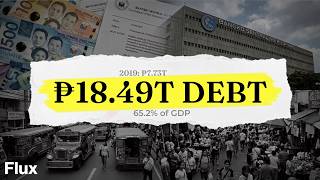
Why Philippine Debt Just Hit ₱18.49 Trillion
リアクション
2026年05月30日
Philippine government debt has reached ₱18.49 trillion.
By March 2026, the country’s debt-to-GDP ratio had climbed to 65.2 percent, the highest level since 2005. But this is not a simple “collapse” story. The Philippines is still investment grade. Most of its debt is domestic. Most of it is long-term. And the debt structure is still considered manageable.
The real problem is different.
The government is still spending far more than it collects. The peso’s fall is making foreign debt heavier in peso terms. Growth slowed sharply in the first quarter of 2026. And interest payments are now eating a bigger share of the national budget.
Source(s):
Bureau of the Treasury — NG Debt Press Release, March 2026
Use this for the ₱18.49 trillion debt figure, the ₱328.43 billion one-month increase, the peso revaluation effect, the domestic and external debt split, and the ₱381.41 billion in guaranteed obligations.
Bureau of the Treasury — Debt Indicators, March 2026
Use this for the debt timeline from 2020 to March 2026, the 65.2 percent debt-to-GDP ratio, the 67.8 percent domestic debt share, the 32.2 percent external debt share, the long-term debt share, and the external debt figures in both pesos and US dollars.
BusinessWorld — Philippines’ debt-to-GDP ratio hits 21-year high
Use this for the “highest since 2005” framing and the broader market context around the March 2026 debt-to-GDP ratio.
Philippine Statistics Authority — Q1 2026 GDP Release
Use this for the 2.8 percent GDP growth figure, the decline in agriculture, the decline in industry, and the 3.3 percent fall in gross capital formation.
Bureau of the Treasury — Full-Year 2025 Cash Operations Report
Use this for the 2025 revenue figure of ₱4.45 trillion, the ₱6.03 trillion in expenditures, the ₱1.58 trillion deficit, the 5.63 percent deficit-to-GDP ratio, and the ₱864.1 billion in interest payments.
DBM — FY 2026 BESF, Table A.2: National Government Fiscal Program, 2024–2028
Use this for the official deficit path: 5.5 percent of GDP in 2025, 5.3 percent in 2026, 4.8 percent in 2027, and 4.3 percent in 2028. Also use it for the ₱950 billion interest payment projection for 2026.
DBM — FY 2026 BESF, Table A.6: Budget Sensitivity to Macroeconomic Parameters
Use this for the statement that a 1 percentage point rise in Treasury bond rates worsens the budget balance by ₱7.8 billion, while a 1 percentage point rise in SOFR worsens it by ₱15.3 billion.
DBM — FY 2026 BESF, Table B.17: National Government Debt Service Expenditures
Use this for the 2026 debt service program: about ₱2.006 trillion total, including ₱950 billion in interest payments and ₱1.056 trillion in principal amortization.
DBM — FY 2026 BESF, Table D.3: Outstanding Debt of the National Government
Use this for the projected year-end 2026 national government debt of ₱19.057 trillion.
OECD Economic Survey: Philippines 2026
Use this for the broader analysis that Philippine public debt remains manageable because of domestic-currency borrowing, moderate maturity, and prudent debt management, but that fiscal consolidation is still needed.
Reuters — Fitch revises Philippines outlook to negative
Use this for Fitch affirming the Philippines at “BBB” while moving the outlook to negative because of medium-term growth risks, disrupted public investment, and exposure to energy shocks.
By March 2026, the country’s debt-to-GDP ratio had climbed to 65.2 percent, the highest level since 2005. But this is not a simple “collapse” story. The Philippines is still investment grade. Most of its debt is domestic. Most of it is long-term. And the debt structure is still considered manageable.
The real problem is different.
The government is still spending far more than it collects. The peso’s fall is making foreign debt heavier in peso terms. Growth slowed sharply in the first quarter of 2026. And interest payments are now eating a bigger share of the national budget.
Source(s):
Bureau of the Treasury — NG Debt Press Release, March 2026
Use this for the ₱18.49 trillion debt figure, the ₱328.43 billion one-month increase, the peso revaluation effect, the domestic and external debt split, and the ₱381.41 billion in guaranteed obligations.
Bureau of the Treasury — Debt Indicators, March 2026
Use this for the debt timeline from 2020 to March 2026, the 65.2 percent debt-to-GDP ratio, the 67.8 percent domestic debt share, the 32.2 percent external debt share, the long-term debt share, and the external debt figures in both pesos and US dollars.
BusinessWorld — Philippines’ debt-to-GDP ratio hits 21-year high
Use this for the “highest since 2005” framing and the broader market context around the March 2026 debt-to-GDP ratio.
Philippine Statistics Authority — Q1 2026 GDP Release
Use this for the 2.8 percent GDP growth figure, the decline in agriculture, the decline in industry, and the 3.3 percent fall in gross capital formation.
Bureau of the Treasury — Full-Year 2025 Cash Operations Report
Use this for the 2025 revenue figure of ₱4.45 trillion, the ₱6.03 trillion in expenditures, the ₱1.58 trillion deficit, the 5.63 percent deficit-to-GDP ratio, and the ₱864.1 billion in interest payments.
DBM — FY 2026 BESF, Table A.2: National Government Fiscal Program, 2024–2028
Use this for the official deficit path: 5.5 percent of GDP in 2025, 5.3 percent in 2026, 4.8 percent in 2027, and 4.3 percent in 2028. Also use it for the ₱950 billion interest payment projection for 2026.
DBM — FY 2026 BESF, Table A.6: Budget Sensitivity to Macroeconomic Parameters
Use this for the statement that a 1 percentage point rise in Treasury bond rates worsens the budget balance by ₱7.8 billion, while a 1 percentage point rise in SOFR worsens it by ₱15.3 billion.
DBM — FY 2026 BESF, Table B.17: National Government Debt Service Expenditures
Use this for the 2026 debt service program: about ₱2.006 trillion total, including ₱950 billion in interest payments and ₱1.056 trillion in principal amortization.
DBM — FY 2026 BESF, Table D.3: Outstanding Debt of the National Government
Use this for the projected year-end 2026 national government debt of ₱19.057 trillion.
OECD Economic Survey: Philippines 2026
Use this for the broader analysis that Philippine public debt remains manageable because of domestic-currency borrowing, moderate maturity, and prudent debt management, but that fiscal consolidation is still needed.
Reuters — Fitch revises Philippines outlook to negative
Use this for Fitch affirming the Philippines at “BBB” while moving the outlook to negative because of medium-term growth risks, disrupted public investment, and exposure to energy shocks.